

Vietnamese Chicken Salad
- Linh Nguyễn Thùy
- Mar 28, 2025
- 3 min read

Chicken salads can be so dull… but not when it’s Vietnamese-style! This slaw-like Vietnamese Chicken Salad is everything you love about Vietnamese food: Fresh and bright, yet full of flavour. Tip: Don’t skimp on the herbs or peanuts. They really bring the dish to life with freshness and texture!
This is a reader-favourite recipe included by popular demand in my debut cookbook “Dinner”!

Vietnamese Chicken Salad
While this exact salad is not strictly authentic, the flavours, texture and spirit of the dish I drew heavily from traditional Vietnamese food. All across Vietnam you see these shredded “slaw-style” salads like green papaya salad and banana blossom salad, loaded with fresh herbs, compared to green leafy salads common in Western cuisine.
And similarly it is with the Nuoc Cham salad dressing that I’m using here. This is the fish sauce-based lime dressing spiked with finely chopped garlic and chilli that the Vietnamese use for literally everything. And that is no exaggeration! Dipping sauce, drizzling, dressing, sauce for meats, noodle bowls…

And the most wonderful thing about this salad, like most Vietnamese food? It’s light and fresh and yet SO GOOD it doesn’t even register that it’s actually incredibly healthy!
What you need for Vietnamese Chicken Salad
Here’s what you need for this chicken salad:

Just a note on some of the ingredients:
Chicken – Just using a store bought roast chicken for convenience here. Handy for hot summer nights! Otherwise, poached chicken is perfect.
Cucumber – Two short (Lebanese) or one long one (continental/English/telegraph);
Peanuts – Peanuts are best and most traditional but you can use cashews too. Sunflower seeds or pepitas would be lovely too!
Fresh mint and coriander/cilantro – You really don’t want to skip the herbs. Vietnamese cuisine treats herbs almost as a vegetable itself, such an essential part of the foods they are! I use ordinary mint here not Vietnamese mint (which has a bit of a peppery flavour and is a bit much when used in large volumes like I do here); and
Wombok / Chinese Cabbage (aka Napa Cabbage) – As recently used in Chang’s Crispy Noodle Salad (possibly Australia’s favourite salad!), this is ideal for slaw-type salads because it’s softer and juicier than regular cabbage like what you use for Coleslaw. The latter needs to be left to wilt so you don’t have pokey bits of cabbage flicking all around your mouth when you eat it. Chinese cabbage on the other hand is good to eat from the dress-go. (Yeah. I went there. Sorry.) The texture is somewhere between traditional stiffer green cabbage, and soft leafy greens.
You will need half a giant one or a full small one because because I only like to use the top 2/3 that holds (mostly) leafy bits. The bottom 1/3 or so is a bit too crunchy with stems, so the texture doesn’t meld as well with the rest of the salad. I leave it for use in stir fries and noodles.
Here is how I cut the cabbage: Two slits then finely shred. Fast and neat!

Vietnamese Salad Dressing
Here’s what you need for the Vietnamese Nuoc Cham salad dressing:
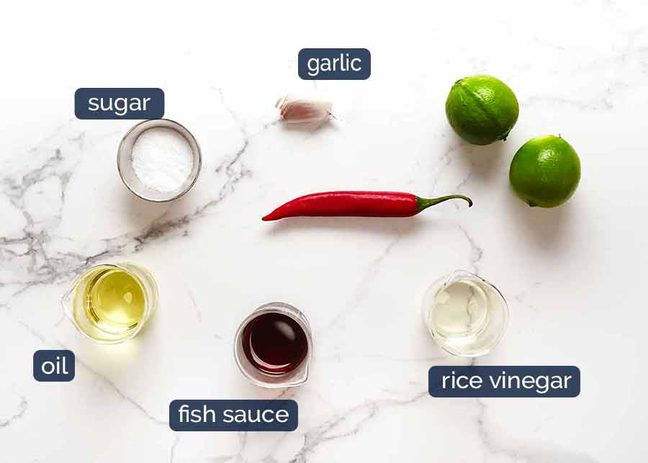
As mentioned above, this is a salad dressing form of Nuoc Cham, the Vietnamese mother-sauce that you will see used in virtually everything in Vietnam! Everybody has their own recipe and there are subtle differences depending on intended use, but the essentials in it are: Fish sauce (rather than soy sauce), sugar, garlic, chilli and something sour – either lime juice or rice vinegar or a combination of both.
Fish sauce
This is the primary sauce used in Vietnamese cooking to add salt, savour and flavour into dishes, rather than soy sauce which is common in some other Asian cuisines.
Made from fermented anchovies, it packs a punch of umami like soy sauce. Yes, the smell is strong and it is fishy-tasting in plain raw form! When cooked or diluted and mixed with other elements, that funk fades away and leaves behind incredible rich and savoury taste in anything it is used (like this reader favourite Vietnamese Pork Bowls).
Source: Recipetineats
Comments